
Primer · Reading time 4 min
What peptides are, and why precision matters.
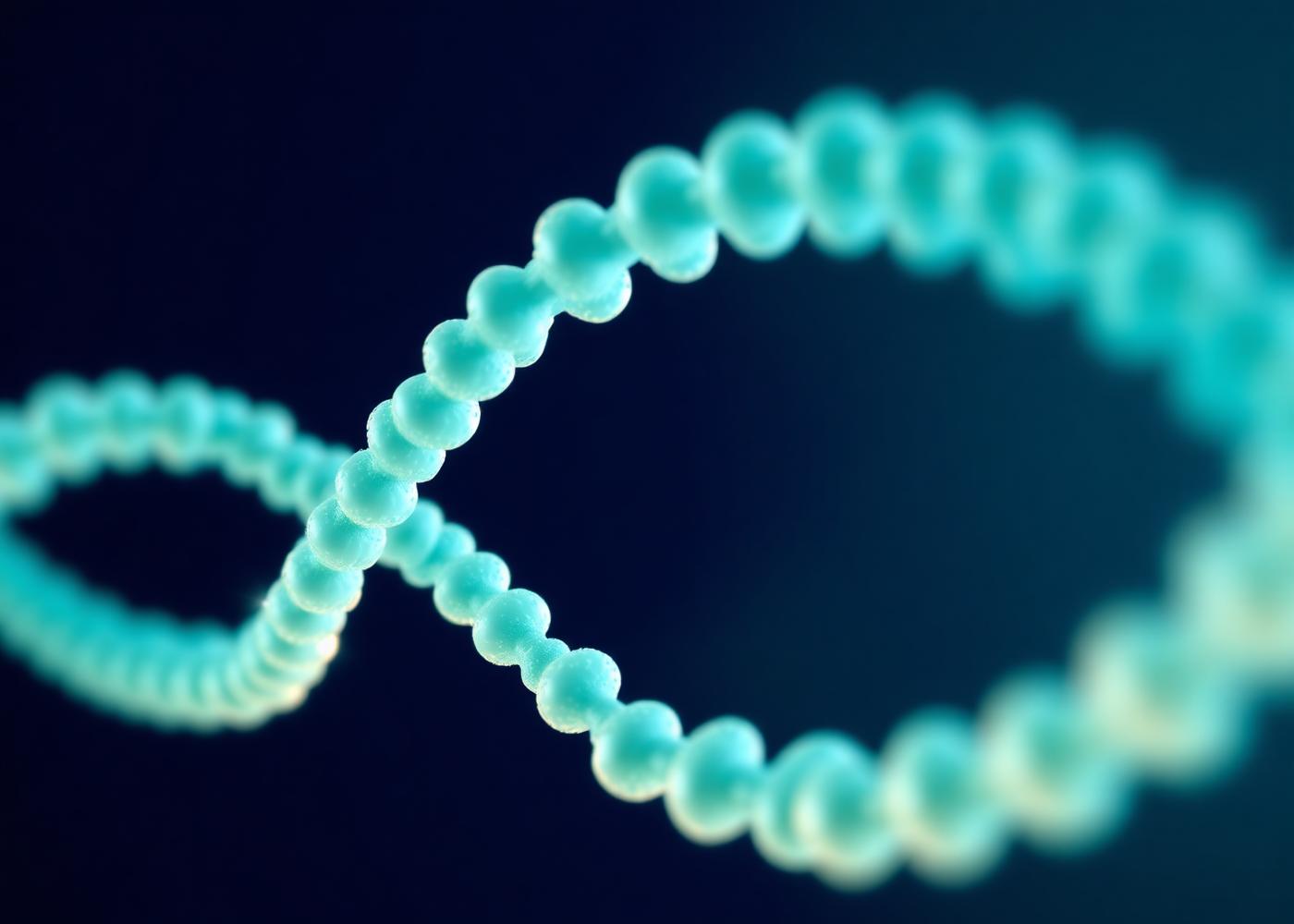
Peptides are short chains of amino acids — typically between two and fifty residues — joined by amide bonds. They sit between single amino acids and full proteins on the biological continuum, and they govern an enormous range of cellular signaling.
01
Structure & synthesis
Modern research peptides are produced by solid-phase peptide synthesis (SPPS), pioneered by Bruce Merrifield in 1963. Amino acids are coupled sequentially to a resin anchor, then cleaved and purified by reverse-phase HPLC. Every PeptopiaLab lot is verified at ≥ 99.3% purity by HPLC and confirmed by ESI-MS.
02
Lyophilized form
Peptides ship as a lyophilized (freeze-dried) powder under inert atmosphere. This is the most stable storage form. Vials should be kept at −20 °C until reconstitution, after which a typical aqueous solution remains stable for two to four weeks at 4 °C depending on sequence.
03
Reconstitution
Use bacteriostatic water or sterile filtered diluent. Direct the stream gently against the inside wall of the vial, swirl until dissolved — never shake. For hydrophobic sequences, a small percentage of acetic acid or DMSO may be required; consult the certificate of analysis.
04
Research use only
Our products are sold strictly for in-vitro research and laboratory development. They are not intended for human or veterinary use, dietary supplementation, cosmetic application, or any therapeutic purpose. Researchers are responsible for compliance with local regulations.